
OSS is Evolving
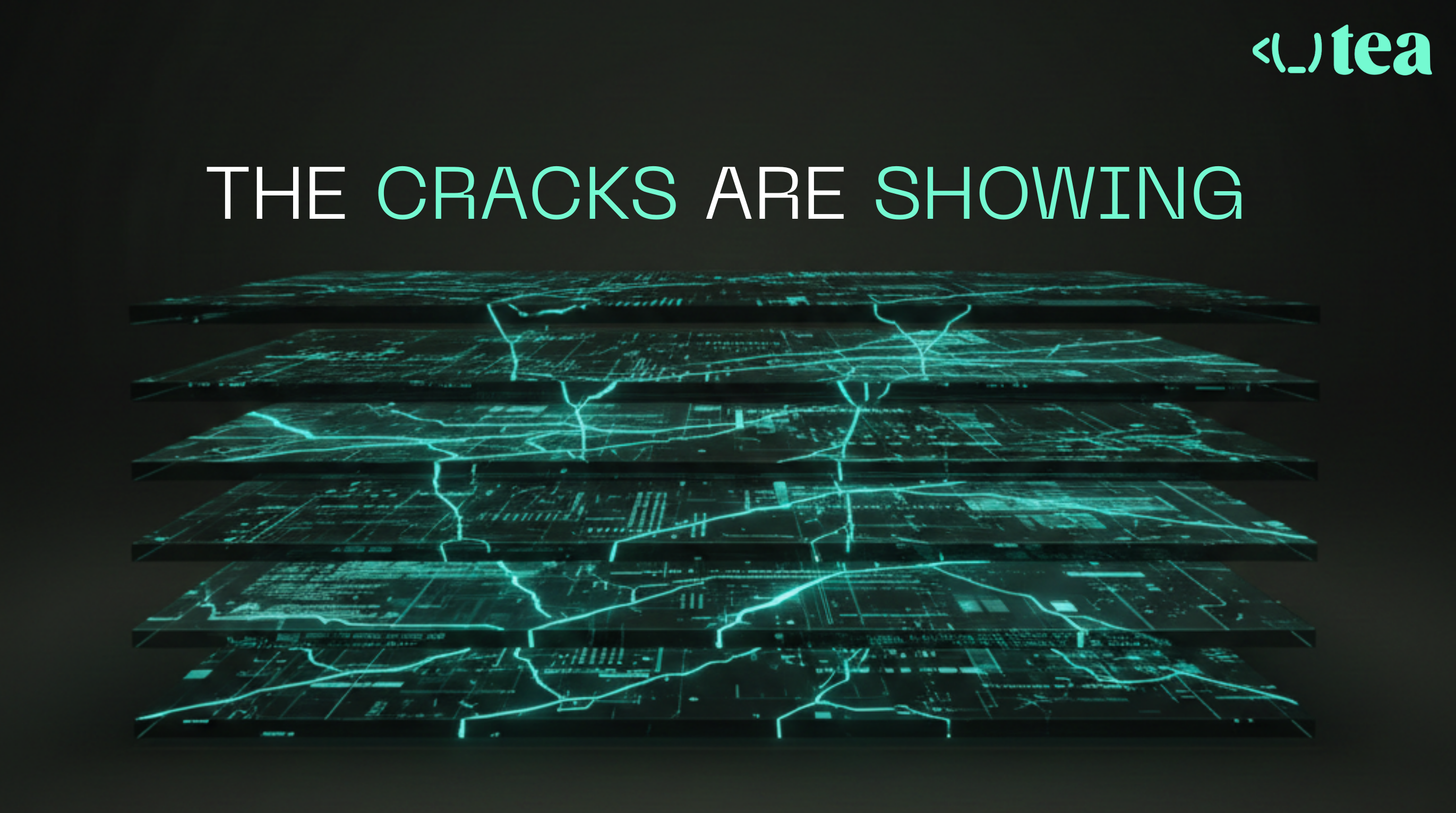
OSS is Evolving
Open source is under more load than ever before.
Usage continues to rise. Dependency graphs keep expanding. More of the internet runs on shared software than at any point in history. But the systems that fund, maintain, and secure that software have not evolved at the same pace.
That mismatch has been building quietly for years. It is now becoming harder to ignore.
TLDR
- Open source is carrying more responsibility than its economic structure was designed for.
- Usage and dependency growth now outpace maintenance, review, and accountability.
- AI accelerates contribution volume, not long-term stewardship.
- This pressure accumulates quietly across the software supply chain.
- tea is being built for this environment, not for moments of attention.
Scale changed the system
Open source was not designed for this level of demand.
What began as a collaborative model built on trust and goodwill now supports global platforms, financial infrastructure, and critical services. The software stack keeps growing. The underlying economics have stayed largely static.
AI accelerates this tension.
It increases output and contribution volume. It does not increase review capacity, accountability, or long-term maintenance. More code moves faster through systems that were not built to absorb sustained load.
The result is not immediate failure. It is accumulated pressure.
How the pressure shows up
This pressure does not arrive as a single breaking moment. It shows up in patterns.
Maintainers carry more responsibility with fewer resources.
Low-signal contributions overwhelm review processes.
Dependency chains grow deeper and harder to audit.
Incentives reward activity without ownership.
The software continues to work. The margin keeps shrinking.
Why this is an economic problem
Most attempts to improve open source sustainability focus on coordination, tooling, or sponsorship. Those approaches help at the edges, but they do not change the structure underneath.
The core issue is economic.
Open source has no native way to reflect usage, dependency, or contribution in a form that markets can reason about. There is no reliable mechanism to distinguish durable work from noise at scale. There is no system that routes support based on actual dependency impact.
As long as this remains true, pressure continues to build.
The environment tea is built for
tea is designed around this reality.
Not as a coordination layer. Not as a central authority. But as infrastructure that allows incentives to form around real usage, real dependencies, and verifiable contribution.
When contribution and provenance become legible, responsibility can follow impact. Noise becomes harder to reward. Maintenance becomes easier to sustain.
This does not remove pressure overnight. It changes how systems respond to it.
The conversation is converging
Recently, the same underlying stress has started appearing across a range of publications. Different audiences. Different angles. The same pressure point.
If you want external context on how this problem is being framed, these pieces are a useful reference:
Cointelegraph
https://cointelegraph.com/press-releases/tea-xyz-flags-critical-open-source-supply-chain-risks-in-2026
Business Insider
https://markets.businessinsider.com/news/stocks/tea-xyz-flags-critical-open-source-supply-chain-risks-in-2026-1035727267
The coverage is not the point. The convergence is.
What comes next
Systems under sustained load either adapt or degrade.
Open source has reached a scale where goodwill alone is no longer sufficient. The next phase requires infrastructure that can carry responsibility, not just usage.
The pressure is showing.
What matters is how the system responds.


